
Kitchen Cabinet Materials
Selecting the right Kitchen Cabinet Materials is a critical step in designing a functional and long-lasting kitchen. Cabinets are not just visual elements; they play a key role in storage efficiency, durability, and daily usability. The choice of materials directly affects how well the kitchen performs under conditions like heat, moisture, and frequent use.
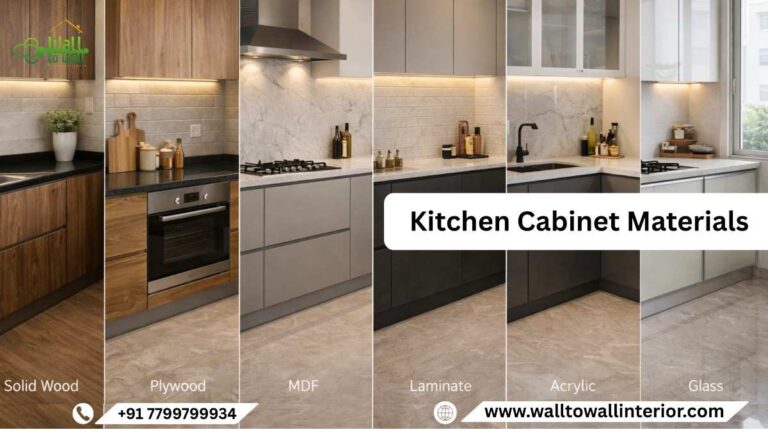
With a wide range of options available, understanding different Kitchen Cabinet Materials allows homeowners to make informed decisions based on budget, maintenance requirements, and overall design preferences. A well-informed selection ensures better performance, supports efficient kitchen storage solutions, and contributes to a balanced and practical kitchen interior.
Why Kitchen Cabinet Materials Matter
Kitchen cabinets are constantly exposed to heat, moisture, grease, and daily wear. Because of this, selecting the right Kitchen Cabinet Materials is essential for ensuring long-term performance and functionality.
The choice of materials directly impacts several important factors:
- Durability and Lifespan: Strong materials last longer and withstand regular use without damage
- Resistance to Moisture and Heat: Proper materials prevent swelling, warping, or deterioration in humid conditions
- Ease of Cleaning and Maintenance: Smooth and resistant surfaces make cleaning simpler and more efficient
- Overall Kitchen Aesthetics: Materials influence the look, finish, and style of the kitchen
- Cost and Long-Term Value: Initial investment and maintenance costs determine overall value over time
Understanding these aspects helps homeowners choose suitable modular kitchen materials that balance practicality, durability, and design requirements.
Plywood
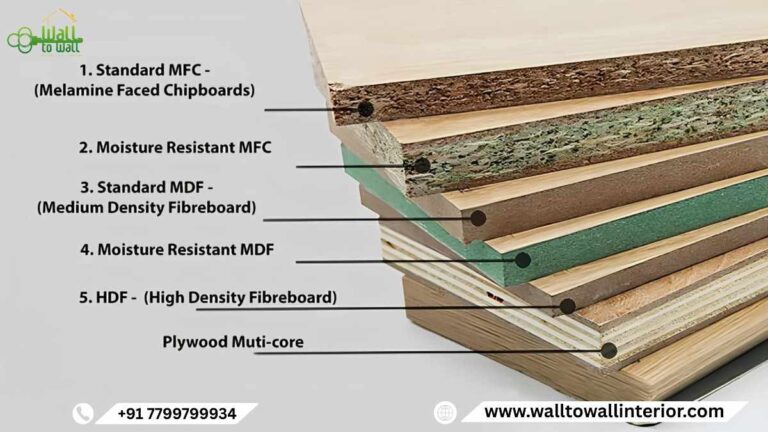
Plywood is one of the most widely used Kitchen Cabinet Materials in modern kitchens due to its strength and reliability. It is commonly chosen for both cabinet structures and shutters where durability is a priority.
Features
- Made by layering thin wood veneers under pressure
- Strong and flexible structure
- Available in different grades such as commercial and marine plywood
Advantages
- High strength and long-lasting performance
- Good resistance to moisture, especially marine-grade plywood
- Suitable for long-term use in demanding kitchen conditions
Limitations
- Higher cost compared to MDF or particle board
- Requires proper finishing for improved durability and appearance
Plywood remains a preferred option among kitchen cabinet wood types, offering a balance of strength, stability, and performance for practical kitchen interiors.
MDF (Medium Density Fiberboard)
MDF is a commonly used option among Kitchen Cabinet Materials, especially where a smooth and uniform surface is required for finishes like paint or laminates. It is widely used in cabinet shutters and decorative panels.
Features
- Made from compressed wood fibers
- Uniform and smooth surface without visible grain
- Ideal for painted and laminated finishes
Advantages
- Cost-effective compared to solid wood and plywood
- Suitable for intricate designs and detailed patterns
- Provides a smooth base for laminates and paint
Limitations
- Lower resistance to moisture compared to plywood
- Can swell or weaken if exposed to water over time
MDF is often used in areas where moisture exposure is minimal, making it a practical choice in Kitchen Cabinet Materials for shutters and design-focused elements.
HDF (High Density Fiberboard)
HDF is a denser and stronger alternative within Kitchen Cabinet Materials, offering improved performance compared to MDF. It is commonly used where a smooth and stable surface is required for high-quality finishes.
Features
- High density and improved strength
- Smooth and uniform surface
- Better load-bearing capacity than MDF
Advantages
- More durable than MDF
- Suitable for premium kitchen cabinet finishes
- Provides better surface stability for laminates and paint
Limitations
- Sensitive to prolonged moisture exposure
- Slightly more expensive than MDF
HDF is typically used in Kitchen Cabinet Materials for shutters and panels where a refined finish and better durability are required, especially in controlled indoor conditions.
Particle Board
Particle board is one of the most economical options among Kitchen Cabinet Materials, often chosen for budget-friendly kitchen setups where cost control is a priority.
Features
- Made from compressed wood chips and resin
- Lightweight structure
- Budget-friendly material
Advantages
- Affordable and widely available
- Easy to cut and install
- Suitable for temporary or low-budget kitchens
Limitations
- Low resistance to moisture and humidity
- Limited durability compared to plywood or HDF
- Not suitable for heavy loads or long-term use
Particle board is commonly used in modular kitchen materials for cost-effective solutions, especially in areas with minimal exposure to moisture and heavy usage.
Solid Wood
Solid wood is a premium option among Kitchen Cabinet Materials, valued for its natural beauty, strength, and long lasting performance. It is commonly used in high end kitchens and classic interior designs.
Features
- Made from natural timber
- Unique grain patterns and textures
- High structural strength
Advantages
- Strong and durable for long-term use
- Provides a natural and elegant appearance
- Can be sanded and refinished multiple times
Limitations
- Expensive compared to engineered materials
- Prone to expansion and contraction due to humidity
- Requires regular maintenance to preserve finish
Solid wood is best suited for luxury kitchens and traditional interiors, where aesthetics and craftsmanship are key considerations in selecting Kitchen Cabinet Materials.
Stainless Steel
Stainless steel is a widely used option in modern and commercial spaces, making it a practical choice among Kitchen Cabinet Materials for durability and hygiene.
Features
- Non-porous and smooth surface
- Resistant to rust and corrosion
- Distinct industrial appearance
Advantages
- Highly durable and long-lasting
- Excellent resistance to moisture and heat
- Easy to clean and maintain
Limitations
- Limited flexibility in design styles
- Prone to visible fingerprints and surface scratches
Stainless steel is a reliable option in Kitchen Cabinet Materials, especially for waterproof kitchen cabinets and environments that require high levels of cleanliness and durability.
PVC (Polyvinyl Chloride)
PVC is a lightweight and moisture-resistant option among Kitchen Cabinet Materials, commonly used in budget-friendly kitchen designs where low maintenance is a priority.
Features
- Made from plastic-based panels
- Available in hollow and solid board options
- Comes with pre-finished surfaces
Advantages
- Waterproof and resistant to termites
- Requires minimal maintenance
- Cost-effective solution for basic kitchen setups
Limitations
- Lower strength compared to plywood or solid wood
- Limited premium appearance and design flexibility
PVC is widely used in kitchen interior materials, especially for budget kitchens and areas exposed to moisture where easy maintenance is essential.
Aluminum
Aluminum cabinets are becoming increasingly popular in modern kitchens, making them a strong option among Kitchen Cabinet Materials for durability and contemporary design.
Features
- Lightweight metal structure
- Corrosion-resistant and non-rusting
- Often combined with glass panels for a modern look
Advantages
- Durable and long-lasting performance
- Suitable for humid and moisture-prone environments
- Offers a clean and modern appearance
Limitations
- Higher cost compared to basic materials like particle board or MDF
- Limited compatibility with traditional or classic design styles
Aluminum is an excellent choice in Kitchen Cabinet Materials for contemporary modular kitchen materials, especially where durability and moisture resistance are key priorities.
Glass
Glass is primarily used for cabinet shutters and is a stylish option within Kitchen Cabinet Materials, especially in modern kitchen designs where openness and light are important.
Features
- Available in transparent, frosted, or tinted finishes
- Often combined with metal or wooden frames for support
- Enhances visual depth and light reflection
Advantages
- Creates a sense of openness and spaciousness
- Adds a clean and modern touch to kitchen interiors
- Easy to clean with simple maintenance
Limitations
- More fragile compared to solid materials
- Requires regular cleaning to maintain clarity and appearance
Glass is commonly used in kitchen cabinet finishes, particularly in modern designs where aesthetics and visual balance are key considerations in selecting Kitchen Cabinet Materials.
Comparison of Kitchen Cabinet Materials
Understanding the differences between Kitchen Cabinet Materials is essential for making practical and informed decisions. Each material offers unique advantages based on durability, cost, maintenance, and design requirements.
Key Comparisons
Plywood vs MDF for Kitchen
- Plywood is stronger, more durable, and offers better moisture resistance, making it suitable for long-term use.
- MDF provides a smoother surface and is more affordable, making it ideal for painted finishes and low-moisture areas.
Solid Wood vs Engineered Wood
- Solid wood is a premium option with natural grain and high strength but requires regular maintenance and is sensitive to humidity changes.
- Engineered wood options like MDF and HDF are more stable, cost-effective, and less prone to expansion or contraction.
Metal vs Wood Cabinets
- Metal cabinets (such as stainless steel or aluminum) offer excellent durability, hygiene, and moisture resistance, making them suitable for heavy-use kitchens.
- Wood cabinets provide warmth, natural aesthetics, and greater design flexibility, making them suitable for both modern and traditional interiors.
Comparing different Kitchen Cabinet Materials based on these factors helps homeowners select the best materials for kitchen cabinets that balance performance, appearance, and long term value.
Factors to Consider When Choosing Kitchen Cabinet Materials
Selecting the right Kitchen Cabinet Materials requires balancing performance, cost, and design. Evaluating key factors helps ensure that your kitchen remains functional, durable, and visually appealing over time.
1. Moisture Resistance
Kitchens are constantly exposed to water, humidity, and spills. Choosing materials like marine plywood, PVC, or stainless steel improves resistance to moisture and prevents swelling or damage.
2. Durability
High-use kitchens demand durable kitchen materials that can handle daily wear, heat, and frequent opening and closing. Materials like plywood and metal offer better long-term performance.
3. Budget Planning
Different Kitchen Cabinet Materials come at varying price points. It is important to balance affordability with durability to achieve long-term value rather than focusing only on initial cost.
4. Maintenance Requirements
Low maintenance interiors benefit from materials such as laminates, PVC, or metal surfaces that are easy to clean and resistant to stains, grease, and scratches.
5. Design and Aesthetic
Material selection should align with your overall kitchen theme. Whether you prefer modern, traditional, or minimal interiors, the right kitchen interior materials will enhance both functionality and visual appeal.
Advantages of Choosing the Right Kitchen Cabinet Materials
Selecting appropriate Kitchen Cabinet Materials plays a crucial role in ensuring a kitchen that is both functional and long-lasting. The right choice directly impacts performance, maintenance, and overall interior quality.
Key Advantages
- Improves Kitchen Lifespan
Durable materials withstand daily wear, moisture, and heat, ensuring cabinets last for many years. - Enhances Storage Efficiency
Strong and stable materials support better cabinet construction, allowing efficient and reliable kitchen storage solutions. - Supports Better Hygiene
Materials like stainless steel, laminates, and PVC offer smooth surfaces that are easy to clean and maintain, improving kitchen hygiene. - Reduces Maintenance Costs
Low-maintenance surfaces minimize the need for frequent repairs, replacements, or refinishing. - Adds Value to the Home
High-quality Kitchen Cabinet Materials enhance both functionality and aesthetics, contributing to overall property value.
Common Mistakes to Avoid
When selecting Kitchen Cabinet Materials, avoiding common errors is essential to ensure durability, functionality, and long-term value.
Key Mistakes
- Choosing Materials Based Only on Cost
Focusing only on budget can lead to poor-quality selections that may require frequent repairs or replacements. - Ignoring Moisture Resistance
Kitchens are exposed to humidity and spills. Selecting materials without proper moisture resistance can cause swelling, warping, or damage. - Overlooking Maintenance Needs
Some materials require regular care. Ignoring maintenance requirements can increase long-term effort and costs. - Mixing Incompatible Materials
Using materials that do not work well together can affect durability, finishing quality, and overall kitchen performance. - Not Considering Long-Term Durability
Short-term decisions may lead to faster wear and tear. Choosing durable Kitchen Cabinet Materials ensures better long-term performance.
Conclusion
Selecting the right Kitchen Cabinet Materials is essential for creating a functional, durable, and visually appealing kitchen. From plywood and MDF to stainless steel and aluminum, each material serves a specific purpose based on usage and environmental conditions.
By understanding factors like durability, moisture resistance, budget, and maintenance, homeowners can make informed decisions. Incorporating suitable modular kitchen materials, kitchen cabinet wood types, kitchen cabinet finishes, and durable kitchen materials ensures long-term performance and efficient kitchen storage solutions.
FAQ's
1. What are the best Kitchen Cabinet Materials for durability?
Plywood, stainless steel, and aluminum are considered among the most durable Kitchen Cabinet Materials for long-term use.
2. Which material is best for moisture resistance in kitchens?
Marine plywood, PVC, and stainless steel offer excellent moisture resistance, making them suitable for humid kitchen environments.
3. Is plywood better than MDF for kitchen cabinets?
steel
4. Are PVC kitchen cabinets a good option?
PVC is a good choice for budget kitchens as it is waterproof and low maintenance, but it may lack the strength of wood-based materials.
5. What is the most affordable kitchen cabinet material?
Particle board and MDF are among the most economical Kitchen Cabinet Materials, suitable for budget-friendly kitchen designs.
6. Can solid wood be used for kitchen cabinets?
Yes, solid wood is durable and aesthetically appealing, but it requires regular maintenance and is more expensive.
7. Are metal cabinets better than wooden cabinets?
Metal cabinets offer better durability and hygiene, while wooden cabinets provide warmth and design flexibility. The choice depends on usage and style preferences.
8. Which material is easiest to maintain?
Laminates, PVC, and stainless steel are easy to clean and require minimal maintenance compared to natural wood.
9. What materials are used in modular kitchen cabinets?
Common modular kitchen materials include plywood, MDF, HDF, particle board, PVC, aluminum, and stainless steel.
10. Do kitchen cabinet materials affect storage efficiency?
Yes, strong and stable materials improve cabinet structure and support better kitchen storage solutions.
11. Which kitchen cabinet material is best for modern interiors?
Acrylic-finished MDF, laminates on plywood, aluminum, and glass combinations are popular for modern kitchen designs.
12. Can kitchen cabinet materials be changed later?
Yes, cabinet shutters and finishes can be updated, but replacing the core material may require major renovation.
13. How do I choose the right kitchen cabinet material?
Consider moisture resistance, durability, budget, maintenance, and design preferences when selecting Kitchen Cabinet Materials.
14. Are glass cabinets practical in kitchens?
Glass is mainly used for shutters and adds visual appeal, but it requires regular cleaning and careful handling.
15. Do high-quality materials increase kitchen cost?
Yes, premium Kitchen Cabinet Materials may have a higher initial cost but offer better durability and long-term value.