
Difference Between PVC and WPC
Selecting the right material is a key part of interior design, especially when it comes to furniture, cabinets, and wall applications. The Difference Between PVC and WPC is an important consideration for homeowners and designers looking for materials that offer both durability and cost efficiency. PVC (Polyvinyl Chloride) and WPC (Wood Plastic Composite) are commonly used in modern interiors, but they vary in terms of composition, performance, and ideal usage.
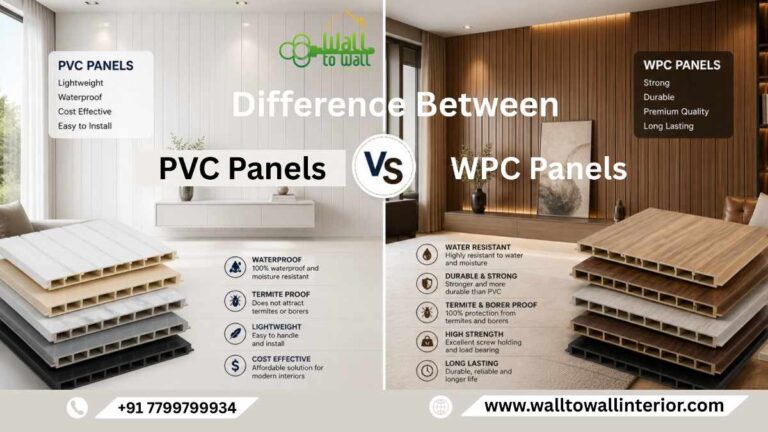
Understanding the Difference Between PVC and WPC allows for better decision-making based on specific requirements. Whether it is for kitchen cabinets, wardrobes, or bathroom applications, each material has its own advantages and limitations. By comparing factors such as strength, water resistance, maintenance, and cost, it becomes easier to choose the most suitable option for long-term interior use.
What is PVC?
PVC (Polyvinyl Chloride) is a synthetic plastic polymer widely used in interior applications due to its versatility and ease of use. It is lightweight, water-resistant, and requires minimal maintenance, making it suitable for areas exposed to moisture. PVC boards are commonly used in modular furniture, wall panels, and kitchen cabinets because they are easy to handle and install.
PVC Board Advantages and Disadvantages
Advantages:
PVC boards are highly water-resistant, which makes them ideal for wet areas such as kitchens and bathrooms. They are lightweight, allowing for quick installation and easy handling. PVC is also termite-proof and resistant to corrosion, ensuring long-term usability. In addition, it requires very little maintenance and can be cleaned easily.
Disadvantages:
Despite its benefits, PVC has some limitations. It is not as strong as wood-based materials, which affects its load-bearing capacity. This makes it less suitable for heavy furniture applications. Additionally, PVC may not provide the same natural wood-like appearance that many homeowners prefer for interior design.
What is WPC?
WPC (Wood Plastic Composite) is a material made by combining wood fibers with plastic, resulting in a strong and durable product that offers the appearance of natural wood along with enhanced resistance to moisture. It is widely used in interior applications where both strength and aesthetics are important.
WPC Board Advantages and Disadvantages
Advantages:
WPC boards are known for their strength and durability, making them suitable for heavy-duty furniture and interior applications. They offer better load-bearing capacity compared to many alternative materials. WPC is resistant to moisture, termites, and decay, which makes it reliable for long-term use. Additionally, it provides a more natural wood-like appearance, making it a preferred choice for those seeking a premium finish.
Disadvantages:
WPC boards are heavier than PVC, which can make handling and installation more complex. They are also slightly more expensive compared to PVC, which may impact budget considerations. In some cases, professional installation is required to ensure proper fitting and finishing.
PVC vs WPC: Key Differences
Understanding the WPC vs PVC difference is important when selecting the right material for different interior applications. The Difference Between PVC and WPC becomes clearer when comparing key factors such as composition, durability, and performance.
1. Composition
The Difference Between PVC and WPC begins with their composition. PVC is a fully synthetic plastic material, whereas WPC is made by combining wood fibers with plastic, giving it a hybrid structure.
2. Strength and Durability
When evaluating PVC vs WPC durability, WPC is generally stronger and more suitable for heavy-duty applications like furniture and cabinets. PVC, being lighter, is less rigid and better suited for lightweight uses.
3. Water Resistance
Both materials are water-resistant and commonly used in kitchens and bathrooms. However, in the comparison of WPC vs PVC for bathroom, PVC tends to perform slightly better in areas with constant exposure to moisture.
4. Appearance
WPC offers a more natural wood-like finish, making it suitable for interiors where aesthetics are important. In contrast, PVC has a smoother and more synthetic appearance.
5. Weight
WPC is heavier and more solid, which contributes to its strength but may require more effort during installation.
Overall, the Difference Between PVC and WPC lies in balancing factors like strength, appearance, and application needs, helping users choose the right material for their interiors.
PVC vs WPC Which is Better?
The question PVC vs WPC which is better does not have a single answer, as it depends on the specific application and requirements. Both materials have their own advantages, and the right choice varies based on factors such as usage, durability, and environmental conditions.
PVC is generally preferred for lightweight applications and areas with high moisture exposure. It performs well in wet environments like kitchens and bathrooms due to its strong water resistance and low maintenance requirements. This makes it a practical option for situations where ease of installation and moisture protection are important.
PVC Board vs WPC Board
- The comparison of PVC board vs WPC board is important when selecting materials for interior applications, as each material serves different purposes based on strength, durability, and usage requirements. Understanding the Difference Between PVC and WPC helps in choosing the right option for furniture and design elements.
- PVC boards are best suited for low-load furniture and modular designs. They are lightweight, easy to handle, and work well in applications where heavy strength is not required. Due to their water resistance, they are also commonly used in moisture-prone areas.
- WPC boards, on the other hand, are more suitable for heavy furniture and long-term use. They offer better strength and load-bearing capacity, making them ideal for wardrobes, cabinets, and structural furniture. Their wood-like appearance also adds to their appeal in interior design.
PVC vs WPC for Interiors
When evaluating WPC vs PVC for interiors, both materials are widely used, but their suitability depends on the specific design and functional requirements. Understanding the Difference Between PVC and WPC helps in selecting the right material for different interior applications.
PVC is commonly used for wall panels, false ceilings, and lightweight furniture. Its water resistance and low maintenance make it a practical choice for areas exposed to moisture. It is also easy to install, which makes it suitable for modular interior solutions.
WPC, on the other hand, is preferred for cabinets, wardrobes, and structural furniture. It offers better strength and durability, making it ideal for applications that require higher load-bearing capacity. Its wood-like finish also enhances the overall look of interior spaces.
PVC vs WPC for Furniture
When comparing PVC vs WPC for furniture, the choice depends on the required strength, durability, and type of usage. Understanding the Difference Between PVC and WPC is important to ensure the right material is selected for long-term performance.
WPC is generally preferred for furniture because of its higher strength and better load-bearing capacity. It is suitable for items like wardrobes, cabinets, and beds that require stability and durability over time. Its composition also provides a more solid structure, making it reliable for everyday use.
PVC vs WPC for Kitchen Cabinets
Moisture resistance is a key factor when selecting materials for kitchen cabinets. In the comparison of PVC vs WPC for kitchen cabinets, both materials are suitable, but they perform differently based on specific requirements. Understanding the Difference Between PVC and WPC helps in making the right choice for long-term use.
PVC is highly resistant to water, making it a practical option for areas that are frequently exposed to moisture, spills, and humidity. It is easy to clean and maintain, which adds to its suitability for kitchen environments.
PVC vs WPC for Wardrobes
When evaluating PVC vs WPC for wardrobes, durability and load-bearing capacity are key factors. Understanding the Difference Between PVC and WPC helps in selecting the right material for long-term wardrobe use.
WPC is often preferred for wardrobes because of its strength and ability to handle heavier loads. It is suitable for large wardrobes, hanging sections, and storage units that require stability over time. Its solid structure also makes it a reliable choice for everyday use.
WPC vs PVC for Bathroom
Bathrooms require materials that can handle constant exposure to moisture, humidity, and water. When comparing WPC vs PVC for bathroom applications, both materials are suitable, but their performance differs based on specific conditions. Understanding the Difference Between PVC and WPC helps in selecting the most appropriate option for long-term use.
PVC is often preferred for bathroom interiors due to its superior water resistance. It does not absorb moisture, making it ideal for areas like vanity units, wall panels, and cabinets that are regularly exposed to water. It is also easy to maintain and resistant to damage caused by humidity.
PVC vs WPC Price
Cost plays a significant role when choosing materials for interior applications. The PVC vs WPC price comparison highlights clear differences based on composition, durability, and usage. Understanding the Difference Between PVC and WPC helps in evaluating not just the initial cost, but also the long-term value.
PVC is generally more affordable, making it a popular choice for budget-friendly projects. It is widely used in modular furniture, wall panels, and areas where cost control is important. Its lower price point makes it suitable for large-scale applications without significantly increasing the overall budget.
PVC vs WPC Pros and Cons
- Understanding the PVC vs WPC pros and cons is essential when selecting the right material for interior applications. The Difference Between PVC and WPC becomes clearer when comparing their strengths and limitations based on usage, durability, and cost.
PVC Pros
PVC is widely chosen for its affordability, making it suitable for budget-friendly interior projects. It is lightweight, which allows for easy handling and installation. One of its major advantages is its high water resistance, making it ideal for moisture-prone areas such as kitchens and bathrooms.
PVC Cons
Despite its benefits, PVC has some drawbacks. It is less durable compared to WPC and may not perform well in heavy-duty applications. Its limited strength makes it unsuitable for furniture that requires high load-bearing capacity.
WPC Pros
WPC is known for its strength and durability, making it a reliable choice for furniture and structural applications. It offers a wood-like appearance, which enhances the overall look of interiors. It is also suitable for heavy-duty use where stability and long-term performance are important.
WPC Cons
WPC comes at a higher cost compared to PVC, which may impact budget considerations. It is also heavier, which can make handling and installation more complex.
Conclusion
Understanding the Difference Between PVC and WPC is important when selecting materials for interior applications. Each material offers unique benefits based on usage, environment, and budget. PVC stands out for its affordability, lightweight nature, and excellent water resistance, making it suitable for moisture-prone areas and modular designs.
WPC, on the other hand, is known for its strength, durability, and wood-like appearance. It is a better choice for furniture and applications that require higher load-bearing capacity and long-term performance.
FAQ's
1. What is the Difference Between PVC and WPC?
The Difference Between PVC and WPC lies in their composition, strength, durability, and usage. PVC is a plastic material, while WPC is a combination of wood fibers and plastic.
2. PVC vs WPC which is better?
PVC vs WPC which is better depends on the application. PVC is ideal for moisture-prone areas, while WPC is better for strength and durability.
3. What is the WPC vs PVC difference in durability?
In terms of PVC vs WPC durability, WPC is stronger and more suitable for heavy-duty applications compared to PVC.
4. What is the difference between PVC board vs WPC board?
PVC board vs WPC board differs in weight, strength, and finish. PVC is lightweight and affordable, while WPC is stronger and offers a wood-like appearance.
5. Which is better for interiors, WPC vs PVC for interiors?
WPC vs PVC for interiors depends on usage. PVC is used for panels and ceilings, while WPC is preferred for furniture and cabinets.
6. PVC vs WPC for furniture – which is better?
In PVC vs WPC for furniture, WPC is better due to its higher strength and load-bearing capacity.
7. What is the PVC vs WPC price difference?
PVC vs WPC price shows that PVC is more affordable, while WPC is slightly more expensive due to its durability.
8. What are PVC vs WPC pros and cons?
PVC vs WPC pros and cons include affordability and water resistance for PVC, while WPC offers durability and a natural finish.
10. What are PVC board advantages and disadvantages?
PVC board advantages and disadvantages include water resistance and low cost as advantages, while limited strength is a disadvantage.
11. PVC vs WPC for kitchen cabinets – which is better?
PVC vs WPC for kitchen cabinets depends on needs. PVC is better for water resistance, while WPC is better for strength.
12. PVC vs WPC for wardrobes – which should I choose?
In PVC vs WPC for wardrobes, WPC is usually preferred for its durability and ability to handle heavier loads.
13. WPC vs PVC for bathroom – which is suitable?
WPC vs PVC for bathroom applications usually favors PVC due to its superior moisture resistance.
14. Which material lasts longer, PVC or WPC?
When comparing PVC vs WPC durability, WPC generally lasts longer in heavy-use applications.
15. Is PVC or WPC better for long-term use?
For long-term use, WPC is often better due to its strength and durability, but PVC is suitable for moisture-heavy environments